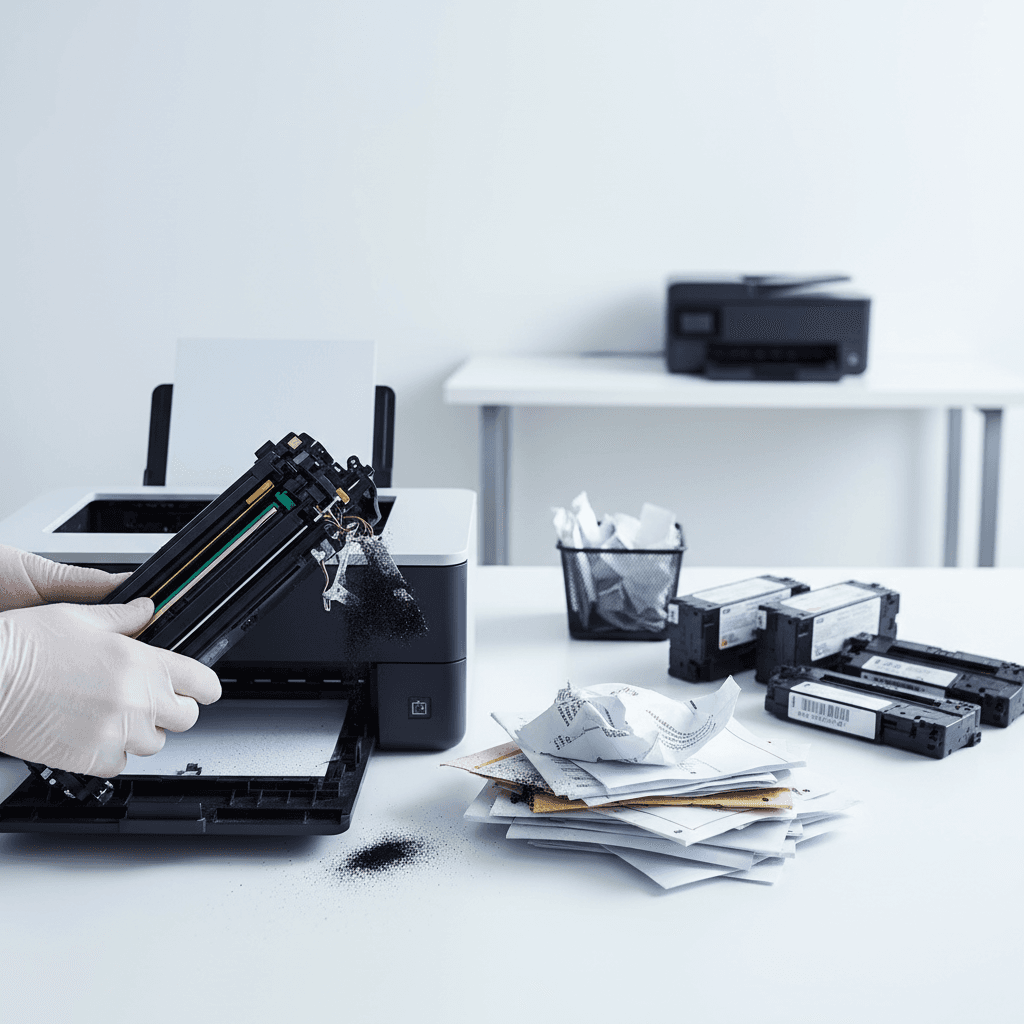
Why Cheap Printers Are Expensive in the Long Run | 2026 Guide
Introduction
In 2026, the initial price tag of a budget printer might seem like a smart financial decision for your office. However, the upfront savings are frequently overshadowed by exorbitant recurring costs. Understanding the total cost of ownership is essential before investing in office equipment.
Main Discussion
- High Cost per Page: Budget inkjet and laser printers often require replacement cartridges that cost almost as much as the printer itself. A standard toner cartridge for a premium printer yields thousands of pages, whereas cheap alternatives run out quickly, drastically increasing the cost per page.
- Low Page Yields: Entry-level printers usually come with starter cartridges that contain minimal toner. When you replace them, the standard capacity cartridges offer low page yields, forcing frequent replacements during high-volume printing tasks.
- Maintenance and Durability: Inexpensive printers are built with lower-quality components designed for light, occasional use. When subjected to daily office demands, they suffer from frequent paper jams, hardware malfunctions, and shorter lifespans, requiring premature replacement.
- Third-Party Toner Compatibility: Many modern budget printers use strict firmware updates to block affordable, third-party compatible toner cartridges. This forces users into a closed ecosystem where they must purchase expensive original equipment manufacturer (OEM) supplies.
Why It Matters
For businesses and corporate offices in Pakistan, managing operational expenses is critical for maintaining profitability in 2026. Imported tech hardware and fluctuating exchange rates mean that recurring costs for OEM toner cartridges can quickly drain an office budget. Investing in a mid-range or high-end laser printer with high-yield, accessible toner options ensures predictable expenses, fewer workflow interruptions, and better long-term financial stability for local enterprises.
Contact
Contact us: +92 332 2805280